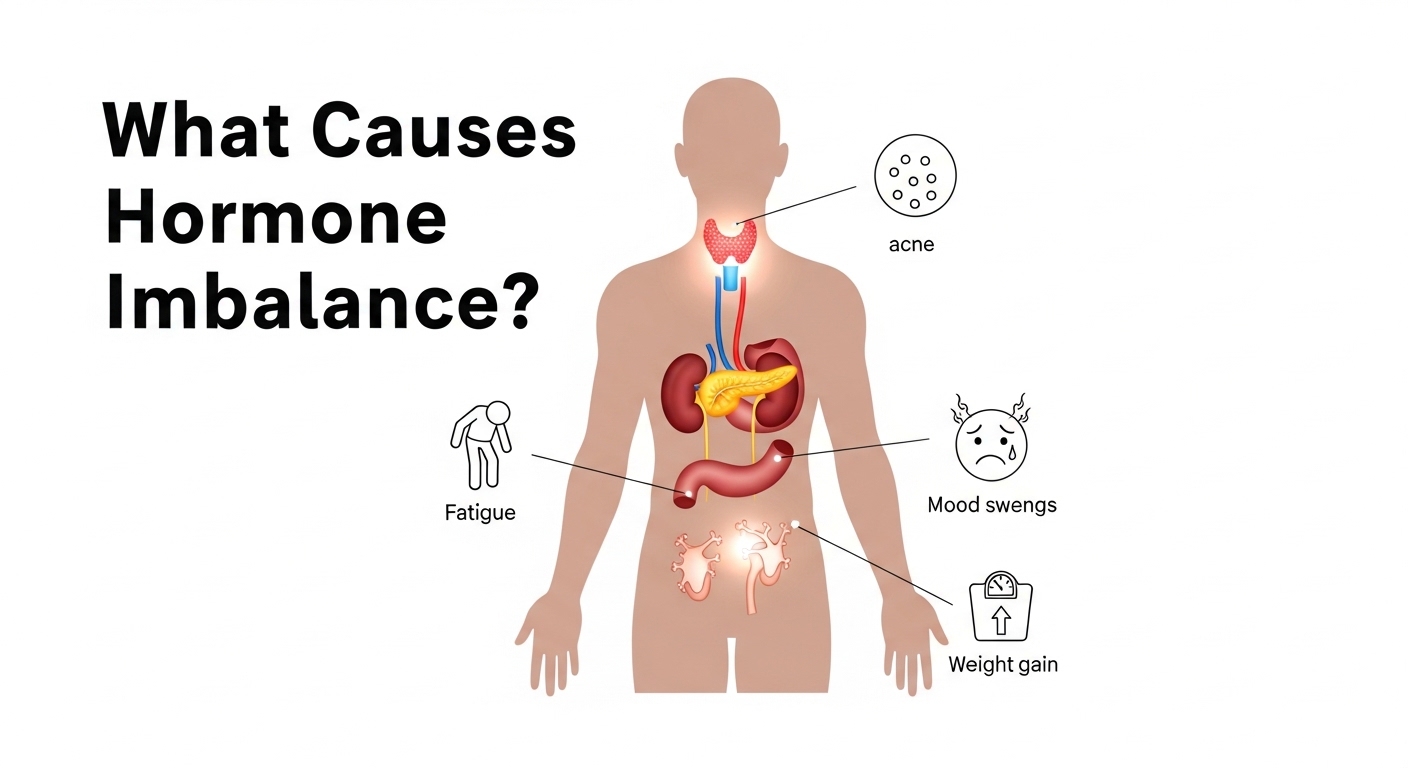
If you’ve been feeling “off” lately – experiencing unexplained weight changes, mood swings, or persistent fatigue that won’t go away no matter how much you rest – you may be dealing with a hormonal imbalance.
Hormonal imbalance is caused by natural life stage changes (puberty, pregnancy, menopause), medical conditions (PCOS, thyroid disorders, diabetes), lifestyle factors (chronic stress, poor diet, lack of sleep), certain medications, and environmental endocrine disruptors.
I’ve spent years researching hormonal health, and one thing is clear: understanding what causes hormone imbalance is the first step toward finding solutions that actually work.
In this guide, I’ll walk you through every major cause of hormonal imbalance – from the natural shifts your body goes through to lifestyle factors you can control. You’ll also learn how to recognize the signs and when it’s time to see a doctor.
ContentsTable of Contents
- 1What Are Hormones and Why Do They Matter?→
- 2Key Hormones in Your Body→
- 3Natural Life Stage Changes That Affect Hormones→
- 4Puberty→
- 5Menstrual Cycle→
- 6Pregnancy and Postpartum→
- 7Perimenopause and Menopause→
- 8Andropause (Male Hormonal Decline)→
- 9Aging and Hormone Production→
- 10Medical Conditions That Cause Hormonal Imbalance→
- 11Polycystic Ovary Syndrome (PCOS)→
- 12Thyroid Disorders→
- 13Diabetes and Insulin Resistance→
- 14Pituitary Disorders→
- 15Adrenal Disorders→
- 16Autoimmune Conditions→
- 17Tumors and Growths→
- 18Lifestyle Factors That Disrupt Hormone Balance→
- 19Chronic Stress→
- 20Poor Diet and Nutrition→
- 21Sleep Deprivation→
- 22Exercise: Too Much or Too Little→
- 23Alcohol, Caffeine, and Substance Use→
- 24Weight and Body Composition→
- 25Medications and Treatments That Affect Hormones→
- 26Hormonal Birth Control→
- 27Steroids and Corticosteroids→
- 28Cancer Treatments→
- 29Other Medications→
- 30Environmental Factors and Endocrine Disruptors→
- 31What Are Endocrine Disruptors?→
- 32Common Sources of Endocrine Disruptors→
- 33Reducing Exposure→
- 34The Gut-Hormone Connection→
- 35How Your Gut Affects Hormones→
- 36Supporting Gut Health for Hormone Balance→
- 37Common Signs of Hormonal Imbalance→
- 38General Symptoms (All Genders)→
- 39Symptoms by Gender→
- 40How Hormonal Imbalance Is Diagnosed?→
- 41Blood Tests→
- 42Timing Matters→
- 43Additional Testing→
- 44Tips for Getting Proper Testing→
- 45Treatment Options Overview→
- 46Medical Treatments→
- 47Lifestyle Modifications→
- 48Natural Support→
- 49When to See a Doctor?→
- 50Which Doctor Should You See?→
- 51Frequently Asked Questions→
- 52What causes hormonal imbalance in females?→
- 53How do I fix my hormonal imbalance?→
- 54How long does it take to fix hormonal imbalance?→
- 55What are the signs your hormones are out of whack?→
- 56Can stress cause hormonal imbalance?→
- 57What doctor treats hormonal imbalance?→
- 58Final Thoughts→
What Are Hormones and Why Do They Matter?
Hormones are chemical messengers produced by your endocrine glands that travel through your bloodstream to tissues and organs throughout your body.
These powerful substances regulate virtually every process in your body, from metabolism and growth to mood, reproduction, and sleep cycles.
Hormonal Imbalance: A condition where you have too much or too little of one or more hormones in your body, disrupting normal bodily functions.
Even tiny changes in hormone levels can have profound effects on how you feel and function.
Key Hormones in Your Body
| Hormone | Primary Function | Produced By |
|---|---|---|
| Estrogen | Reproductive health, bone density, mood | Ovaries |
| Progesterone | Menstrual cycle, pregnancy support | Ovaries |
| Testosterone | Muscle mass, libido, energy | Testes, Ovaries |
| Thyroid Hormones (T3, T4) | Metabolism, energy, temperature | Thyroid Gland |
| Cortisol | Stress response, blood sugar | Adrenal Glands |
| Insulin | Blood sugar regulation | Pancreas |
| Melatonin | Sleep-wake cycle | Pineal Gland |
Your endocrine system works like an intricate communication network. When one hormone is out of balance, it often affects others, creating a cascade effect throughout your body.
Natural Life Stage Changes That Affect Hormones
Your hormones naturally fluctuate throughout your life. Understanding these expected changes helps distinguish normal shifts from problematic imbalances.
Puberty
During puberty, the body dramatically increases production of sex hormones – estrogen and progesterone in females, testosterone in males.
This surge triggers physical development, growth spurts, and can cause temporary symptoms like acne, mood swings, and irregular periods.
These fluctuations typically stabilize by the late teens or early twenties.
Menstrual Cycle
Estrogen and progesterone levels rise and fall throughout the monthly menstrual cycle.
Many women experience hormone-related symptoms during specific phases, particularly before menstruation (PMS) or during ovulation.
Pregnancy and Postpartum
Pregnancy triggers some of the most dramatic hormonal changes a body can experience.
Estrogen and progesterone levels increase significantly to support fetal development. Human chorionic gonadotropin (hCG) – the hormone detected in pregnancy tests – rises rapidly in early pregnancy.
After delivery, hormone levels drop sharply, which may contribute to postpartum mood changes and other symptoms.
Perimenopause and Menopause
Perimenopause typically begins in a woman’s 40s, though it can start earlier. During this transition, estrogen and progesterone production becomes irregular.
Symptoms may include hot flashes, night sweats, irregular periods, mood changes, and sleep disturbances.
Menopause occurs when menstruation stops for 12 consecutive months, typically around age 51. After menopause, estrogen levels remain permanently lower.
Andropause (Male Hormonal Decline)
Men also experience age-related hormonal changes, sometimes called andropause or late-onset hypogonadism.
Testosterone levels naturally decline by about 1% per year after age 30. Some men experience symptoms like decreased energy, reduced muscle mass, mood changes, and lower libido.
Unlike menopause, this decline is gradual rather than sudden.
Aging and Hormone Production
Beyond reproductive hormones, aging affects other hormone systems. Growth hormone production decreases, and the body may become less sensitive to insulin.
Thyroid function can also change with age, though this varies significantly between individuals.
Medical Conditions That Cause Hormonal Imbalance
Numerous medical conditions directly affect hormone production, release, or function. If you’re experiencing persistent symptoms, an underlying condition may be the cause.
Polycystic Ovary Syndrome (PCOS)
PCOS affects approximately 1 in 10 women of reproductive age, making it one of the most common hormonal disorders.
Women with PCOS typically have elevated androgens (male hormones), which may cause irregular periods, acne, excess hair growth, and difficulty getting pregnant.
PCOS is also associated with insulin resistance, which can lead to weight gain and increase diabetes risk.
Thyroid Disorders
Hypothyroidism (underactive thyroid) occurs when the thyroid doesn’t produce enough hormones. Symptoms may include fatigue, weight gain, cold sensitivity, constipation, and depression.
Hyperthyroidism (overactive thyroid) involves excess thyroid hormone production. This may cause weight loss, rapid heartbeat, anxiety, tremors, and heat intolerance.
Thyroid disorders affect an estimated 20 million Americans, with women being 5-8 times more likely to develop thyroid problems than men.
Diabetes and Insulin Resistance
In Type 1 diabetes, the pancreas produces little or no insulin. In Type 2 diabetes, cells become resistant to insulin’s effects.
Insulin imbalance affects blood sugar regulation and can influence other hormones, including those involved in appetite, metabolism, and reproductive function.
Pituitary Disorders
The pituitary gland, often called the “master gland,” controls many other hormone-producing glands.
Pituitary tumors (usually benign) or other dysfunction can disrupt production of growth hormone, prolactin, and hormones that signal the thyroid, adrenals, and reproductive organs.
Adrenal Disorders
Cushing’s syndrome results from prolonged exposure to high cortisol levels. It may cause weight gain (particularly in the face and abdomen), high blood pressure, and skin changes.
Addison’s disease occurs when the adrenal glands don’t produce enough cortisol and aldosterone. Symptoms include fatigue, weight loss, low blood pressure, and darkening skin.
Autoimmune Conditions
Several autoimmune conditions target hormone-producing glands:
- Hashimoto’s thyroiditis – the most common cause of hypothyroidism
- Graves’ disease – the most common cause of hyperthyroidism
- Type 1 diabetes – autoimmune destruction of insulin-producing cells
- Premature ovarian insufficiency – can be caused by autoimmune attack on ovaries
Tumors and Growths
Tumors on endocrine glands (whether benign or malignant) can affect hormone production.
These may cause overproduction of certain hormones or damage gland tissue, leading to underproduction.
Lifestyle Factors That Disrupt Hormone Balance
Many hormonal imbalances stem from lifestyle factors within your control. Understanding these can help you make changes that support hormonal health.
Chronic Stress
When you’re stressed, your adrenal glands produce cortisol. While helpful in short bursts, chronically elevated cortisol disrupts nearly every bodily system.
High cortisol can suppress thyroid function, interfere with sex hormone production, increase insulin resistance, and affect sleep-regulating melatonin.
If you’ve noticed symptoms worsening during stressful periods, the connection may be more than coincidental.
Important: Chronic stress doesn’t just “feel bad” – it creates measurable hormonal changes that affect your entire body.
Poor Diet and Nutrition
What you eat directly impacts hormone production and balance.
Factors that may disrupt hormones:
- High sugar and refined carbohydrate intake (affects insulin)
- Excessive processed foods
- Insufficient protein (needed for hormone synthesis)
- Low fiber intake (affects estrogen metabolism)
- Nutrient deficiencies (vitamin D, B vitamins, zinc, magnesium)
- Very low-fat diets (fat is needed to produce hormones)
Crash dieting and severe calorie restriction can also signal your body to reduce thyroid hormone production and disrupt reproductive hormones.
Sleep Deprivation
Sleep is when your body performs essential hormonal regulation and repair.
Studies suggest that even one week of inadequate sleep may affect insulin sensitivity. Sleep deprivation also increases cortisol, decreases growth hormone, and disrupts appetite-regulating hormones leptin and ghrelin.
This may explain why poor sleep is associated with weight gain – your hunger hormones literally change.
Exercise: Too Much or Too Little
Both extremes can disrupt hormones.
Too little exercise may contribute to insulin resistance, weight gain, and lower testosterone levels.
Too much exercise (overtraining), particularly combined with inadequate nutrition, can suppress reproductive hormones. In women, this may cause missed periods (exercise-induced amenorrhea). In men, it can lower testosterone.
The key is finding a sustainable balance that supports rather than stresses your body.
Alcohol, Caffeine, and Substance Use
Alcohol affects estrogen metabolism, can lower testosterone, and disrupts sleep quality.
Caffeine in moderate amounts is generally fine for most people, but excessive consumption may increase cortisol and affect sleep.
Smoking is associated with earlier menopause and thyroid problems.
Weight and Body Composition
Fat tissue is metabolically active and produces estrogen. Both excess weight and being significantly underweight can affect hormone balance.
Obesity is associated with insulin resistance, elevated estrogen, and lower testosterone in men.
Being underweight can suppress reproductive hormones and thyroid function.
Medications and Treatments That Affect Hormones
Certain medications and medical treatments can cause hormonal changes as either their intended effect or as a side effect.
Hormonal Birth Control
Birth control pills, patches, injections, and hormonal IUDs work by altering your natural hormone patterns to prevent pregnancy.
Some people experience mood changes, weight fluctuations, or other symptoms while using hormonal contraception.
Steroids and Corticosteroids
Long-term use of corticosteroids (like prednisone) can suppress your adrenal glands’ natural cortisol production and affect other hormones.
Anabolic steroids used for muscle building can severely disrupt testosterone production and reproductive hormones.
Cancer Treatments
Chemotherapy and radiation can damage hormone-producing glands, sometimes permanently.
Hormone therapies used to treat certain cancers intentionally alter hormone levels.
Other Medications
Various medications may affect hormones as side effects, including some antidepressants, antipsychotics, blood pressure medications, and opioids.
If you suspect a medication is affecting your hormones, discuss alternatives with your healthcare provider – but don’t stop prescribed medications without medical guidance.
Environmental Factors and Endocrine Disruptors
Chemicals in our environment can interfere with hormone function – a fact that’s increasingly recognized by researchers but often overlooked in discussions of hormonal imbalance.
What Are Endocrine Disruptors?
Endocrine-disrupting chemicals (EDCs) are substances that may interfere with hormone production, release, transport, metabolism, or function.
They can mimic hormones (particularly estrogen), block hormone receptors, or affect how hormones are metabolized.
Common Sources of Endocrine Disruptors
- Plastics – BPA and phthalates found in food containers, water bottles, and packaging
- Personal care products – parabens, phthalates, and synthetic fragrances in lotions, shampoos, and cosmetics
- Pesticides and herbicides – residues on non-organic produce
- Flame retardants – in furniture, mattresses, and electronics
- Non-stick cookware – PFAS chemicals in Teflon and similar coatings
- Household cleaners – various synthetic chemicals
Reducing Exposure
While it’s impossible to avoid all endocrine disruptors, you can reduce exposure:
- Choose glass or stainless steel over plastic for food storage
- Look for personal care products labeled “paraben-free” and “phthalate-free”
- Eat organic when possible, especially for high-pesticide produce
- Ventilate your home well
- Filter drinking water
- Use natural cleaning products
Pro Tip: Focus on changes you can sustain. Even small reductions in EDC exposure may support hormonal health over time.
The Gut-Hormone Connection
Emerging research reveals a fascinating relationship between gut health and hormonal balance – one that most articles on this topic overlook.
How Your Gut Affects Hormones
Your gut microbiome (the trillions of bacteria living in your digestive tract) influences hormone health in several ways:
- Estrogen metabolism: A collection of gut bacteria called the “estrobolome” produces enzymes that affect how estrogen is processed and recycled in your body
- Cortisol regulation: Gut bacteria communicate with your brain through the gut-brain axis, influencing stress hormones
- Thyroid function: Gut bacteria help convert inactive thyroid hormone (T4) to active form (T3)
- Insulin sensitivity: Gut microbiome composition affects blood sugar regulation
Supporting Gut Health for Hormone Balance
Based on current research, supporting gut health may help hormone balance:
- Eat plenty of fiber from vegetables, fruits, and whole grains
- Include fermented foods like yogurt, kefir, sauerkraut, and kimchi
- Limit processed foods and added sugars
- Consider a probiotic supplement (discuss with your doctor)
- Manage stress (which affects gut bacteria composition)
Common Signs of Hormonal Imbalance
Hormonal imbalance can manifest in many ways. Symptoms often overlap with other conditions, which is why proper diagnosis is essential.
General Symptoms (All Genders)
- Unexplained weight changes – gain or loss without diet changes
- Persistent fatigue – tiredness that doesn’t improve with rest
- Mood changes – depression, anxiety, irritability
- Sleep disturbances – insomnia or excessive sleepiness
- Skin problems – adult acne, dry skin, or rashes
- Hair changes – thinning hair or excess hair growth
- Temperature sensitivity – always too hot or too cold
- Digestive issues – bloating, constipation, or diarrhea
- Brain fog – difficulty concentrating or memory issues
- Decreased libido – reduced sex drive
- Muscle weakness – loss of strength or muscle mass
Symptoms by Gender
| Symptoms More Common in Women | Symptoms More Common in Men |
|---|---|
| Irregular or heavy periods | Erectile dysfunction |
| Hot flashes and night sweats | Breast tissue development (gynecomastia) |
| Vaginal dryness | Decreased facial/body hair |
| Breast tenderness | Loss of muscle mass |
| Fertility problems | Low sperm count |
| Excess facial hair (hirsutism) | Decreased bone density |
Note: Having one or two of these symptoms doesn’t necessarily mean you have a hormonal imbalance. However, multiple persistent symptoms warrant investigation.
How Hormonal Imbalance Is Diagnosed?
If you suspect a hormonal imbalance, proper testing is essential – both to confirm the issue and identify the cause.
Blood Tests
Blood tests are the primary method for measuring hormone levels. Common tests include:
- Thyroid panel – TSH, T3, T4, thyroid antibodies
- Sex hormones – estrogen, progesterone, testosterone, FSH, LH
- Cortisol – may be tested at different times of day
- Insulin and blood sugar – fasting glucose, HbA1c, insulin
- Other markers – DHEA, prolactin, growth hormone (as needed)
Timing Matters
Hormone levels fluctuate throughout the day and (for women) throughout the menstrual cycle. Testing at the right time is crucial:
- Cortisol is typically highest in the morning
- Sex hormones in women are often tested on specific cycle days
- Some tests require fasting
Discuss optimal testing timing with your healthcare provider.
Additional Testing
Depending on symptoms and initial results, your doctor may order:
- Ultrasound (to examine thyroid, ovaries, or adrenal glands)
- MRI or CT scan (if pituitary issues are suspected)
- Physical examination
- Review of symptoms and medical history
Tips for Getting Proper Testing
Based on real patient experiences, here’s how to advocate for thorough testing:
- Keep a symptom diary before your appointment
- Be specific about which symptoms bother you most
- Ask for copies of your test results (not just “normal” or “abnormal”)
- If testing comes back “normal” but symptoms persist, ask about additional tests or specialist referral
- Consider seeing an endocrinologist for complex hormone issues
Treatment Options Overview
Treatment for hormonal imbalance depends entirely on the underlying cause. This overview provides general information – always work with a healthcare provider for personalized treatment.
Medical Treatments
Depending on the diagnosis, medical treatments may include:
- Hormone replacement therapy – for menopause, low testosterone, or thyroid disorders
- Medications – to regulate specific hormones (thyroid medication, metformin for insulin resistance, etc.)
- Treating underlying conditions – addressing the root cause when possible
Lifestyle Modifications
Lifestyle changes can significantly impact hormone balance:
- Balanced, nutrient-rich diet
- Regular, moderate exercise
- Stress management (meditation, yoga, therapy)
- Adequate sleep (7-9 hours for most adults)
- Limiting alcohol and caffeine
- Maintaining healthy weight
Natural Support
Some people find additional support through:
- Certain supplements (vitamin D, omega-3s, adaptogens – under medical guidance)
- Acupuncture
- Herbal remedies (with caution, as some affect hormones)
Important: Always discuss supplements and natural remedies with your doctor, especially if you’re taking medications or have medical conditions.
When to See a Doctor?
Don’t dismiss persistent symptoms as “just stress” or “getting older.” Seek medical evaluation if you experience:
- Symptoms that persist for more than a few weeks
- Symptoms that interfere with daily life
- Sudden or severe symptom onset
- Irregular or absent periods (if not explained by birth control or menopause)
- Unexplained significant weight changes
- Signs of thyroid problems (neck swelling, extreme temperature sensitivity)
- Symptoms of diabetes (excessive thirst, frequent urination)
Which Doctor Should You See?
Start with your primary care physician – they can order initial tests and refer you if needed.
Specialists who treat hormonal issues:
- Endocrinologist – hormone specialist (best for complex cases)
- Gynecologist – women’s reproductive hormone issues
- Urologist – men’s hormone issues
- Reproductive endocrinologist – fertility-related hormone problems
If you feel your concerns aren’t being taken seriously, seeking a second opinion is completely reasonable.
Frequently Asked Questions
What causes hormonal imbalance in females?
In females, hormonal imbalance may be caused by natural life changes (puberty, pregnancy, perimenopause, menopause), conditions like PCOS or thyroid disorders, chronic stress, poor diet, lack of sleep, certain medications including birth control, and environmental endocrine disruptors.
How do I fix my hormonal imbalance?
Treatment depends on the underlying cause. Options may include hormone replacement therapy, medications targeting specific hormones, lifestyle changes (better diet, exercise, stress management, adequate sleep), and addressing underlying medical conditions. Work with a healthcare provider for proper diagnosis and personalized treatment.
How long does it take to fix hormonal imbalance?
Timeline varies significantly depending on the cause. Lifestyle-related imbalances may improve within 3-6 months with consistent changes. Medical conditions like thyroid disorders may require ongoing medication. Some people notice improvement in weeks, while others need months of treatment. Regular follow-up testing helps track progress.
What are the signs your hormones are out of whack?
Common signs include unexplained weight changes, persistent fatigue, mood swings, irregular periods, sleep problems, adult acne, hair loss or excess hair growth, temperature sensitivity, low libido, and brain fog. Having multiple persistent symptoms warrants medical evaluation.
Can stress cause hormonal imbalance?
Yes, chronic stress significantly affects hormone balance. Prolonged stress elevates cortisol, which can suppress thyroid function, disrupt sex hormones, increase insulin resistance, and affect sleep hormones. Managing stress is an important part of supporting hormonal health.
What doctor treats hormonal imbalance?
Start with your primary care physician for initial evaluation and testing. Depending on the issue, you may be referred to an endocrinologist (hormone specialist), gynecologist (women’s hormonal issues), urologist (men’s hormonal issues), or reproductive endocrinologist (fertility-related problems).
Final Thoughts
Hormonal imbalance is complex, with causes ranging from natural life changes to medical conditions, lifestyle factors, and environmental exposures.
The good news is that many causes are identifiable and treatable. Understanding what may be disrupting your hormones is the first step toward finding solutions.
If you’re experiencing symptoms that suggest hormonal imbalance, don’t wait to seek help. Proper diagnosis and treatment can significantly improve your quality of life.
Your symptoms are real, and you deserve answers.
Disclaimer: This article is for informational purposes only and does not constitute medical advice. Always consult a licensed healthcare provider before starting any treatment for hormonal imbalance. The information provided here is based on current medical understanding and research but should not replace professional medical evaluation and personalized care.